The best hiking trails for beginner adventurers don't exist (until you define beginner)
Ask ten hikers what makes a trail "beginner-friendly" and you'll get ten different answers, most of them wrong for you specifically. Someone will say "under five miles." Someone else will say "no elevation gain." A third person will recommend a trail that nearly killed them on their first attempt and call it "easy, honestly."
The problem isn't a shortage of trail recommendations. It's that almost nobody defines the threshold before recommending the trail. So let's fix that first, then talk about the best hiking trails for beginner adventurers — real ones, with real numbers.
Key takeaways
- A beginner-friendly hike is a measurable profile, not a vibe: distance, elevation gain, altitude, terrain, and bailout options.
- Distance without elevation gain tells you almost nothing. A flat 8-mile walk is easier than a 3-mile scramble up 1,800 feet.
- Some famous "beginner" trails are illegal to hike. Pali Puka in Hawaii is the clearest example.
- Gummy bears aren't a joke — fast sugar matters on a climb, and there's a real reason hikers carry them.
- New Hampshire's "Terrifying 25" is a list of difficult trails, not a beginner's bucket list. Know what you're looking at before you follow a name.
What actually counts as beginner-friendly
Most trail sites tell you a distance and a difficulty rating. That's it. It's not enough, and it's why so many first hikes turn into miserable slogs.
Here's the profile I use, and it's the one I'd hand to anyone starting out:
- Distance: under 5 miles (8 km) for a true first hike
- Elevation gain: under 1,000 feet (300 m) — this matters more than distance
- Altitude ceiling: under 8,000 feet, so you're not fighting thin air on top of everything else
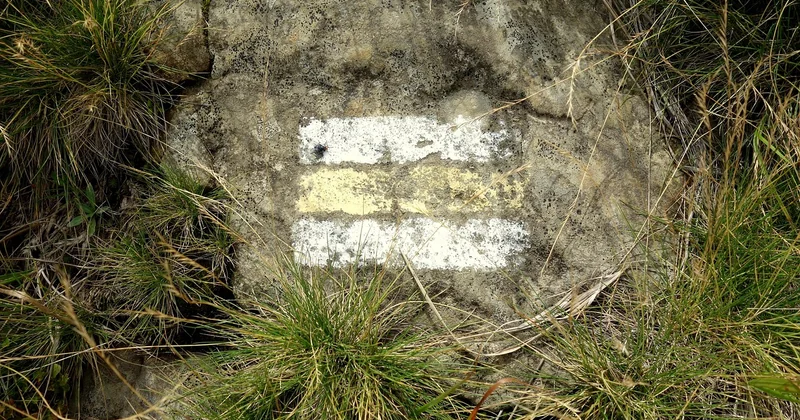
- Terrain: packed dirt or gravel, no rock scrambling, no exposed ledges
- Time: 1.5 to 3 hours round trip, including breaks
- Bailout: at least one point where you can turn around without committing to the full loop
Why elevation gain beats distance as a difficulty signal
I made this mistake early on. I picked a trail listed as "3 miles, easy" and assumed it would be a gentle stroll. It climbed 1,700 feet in the first mile. I sat down twice on the way up and finished with legs that shook for an hour afterward.
A mile of flat walking costs you almost nothing. A mile of sustained uphill costs you three to four times the effort for the same distance. So when you're evaluating any trail, look at feet-per-mile of gain first. Under 200 feet per mile is genuinely gentle. Over 500 feet per mile is a workout, regardless of total length.
Altitude is the other silent killer. If you live at sea level and drive up to a trailhead at 9,000 feet, you'll feel it within fifteen minutes. Roughly a third of visitors to high-altitude parks report headaches or shortness of breath on their first day. It's not weakness. It's physiology.
What is considered a beginner-friendly hike?
A beginner-friendly hike is one where a reasonably healthy person with no hiking experience can finish the round trip in a few hours without technical skills, specialized gear, or route-finding ability, and can turn back at any point without danger. That's the whole definition. The numbers above are how you measure it in practice.
Trails worth your first weekend (and one to avoid)
You don't need a plane ticket to start. The best beginner trail near you is usually within an hour's drive, which matters more than people admit: if the drive is longer than the hike, you won't go back.
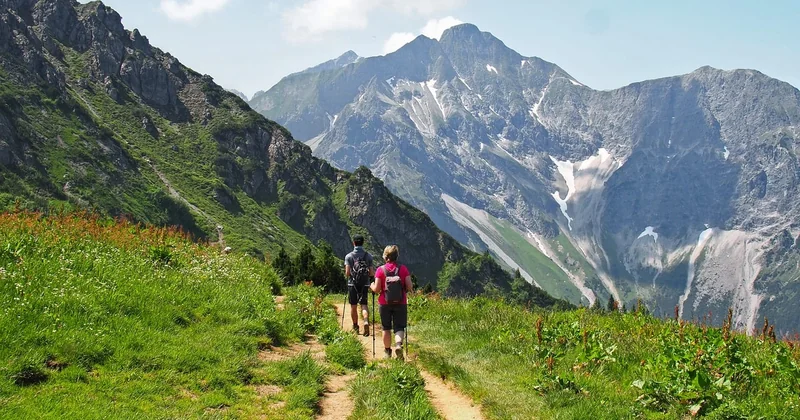
West coast picks
In California, the coastal options are hard to beat for a first outing. Point Lobos near Carmel has short loops along the water with minimal gain — under 100 feet on most sections. Big Sur's Pfeiffer Falls trail sits around two miles round trip with a waterfall at the end, which is exactly the kind of reward that keeps beginners coming back.
For something with more drama and still-manageable effort, the Sedona area in Arizona offers red rock trails that run two to four miles with gentle grades. The catch? Heat. I tried a Sedona trail in late morning in June and turned around at the halfway point. Start before 7 a.m. or don't start at all.
East coast and beyond
Acadia National Park in Maine has a network of carriage roads, which are wide, graded gravel paths originally built for horse carriages. They're ideal for beginners precisely because they were engineered for wheeled traffic, not foot traffic. You get the views without the scramble.
Further afield, the Lake District in England and the Blue Mountains outside Sydney both offer well-marked short trails with clear signage and regular bailout points. The thing they share with the American parks: signage and maintenance. A well-marked trail is a beginner-friendly trail. A faint path with no markers is not, whatever the distance.
Is Pali Puka illegal?
Yes. Pali Puka, on the island of Oahu in Hawaii, is a closed and illegal trail. It runs along a narrow ridge with sheer drops on both sides and has been the site of serious injuries and deaths. Hikers have been cited and fined for accessing it. It appears on plenty of social media feeds as a "must-do," which is exactly why it's worth naming here: popularity on a screen says nothing about legality or safety. If a trail is officially closed, skip it. There's no view worth a rescue call.
Gear, food, and the gummy bear question
You can spend a fortune on gear before your first hike. Don't. Here's what actually matters, in order:
- Shoes with grip. Trail runners or light hikers. Running shoes on packed dirt are fine; running shoes on wet rock are not.
- Water. Half a liter per hour of hiking, minimum. More in heat. This is the single most common beginner mistake — I've run out twice and both times it turned a pleasant walk into a countdown to the car.
- A layer. Summits and shaded valleys run 10 to 15 degrees cooler than the trailhead.
- Your phone, charged, with the route downloaded offline. Signal disappears exactly where you'd want it.
Why do hikers eat gummy bears?
Because they're fast sugar in a package that doesn't melt into a paste in your pocket. On a sustained climb, your body burns through stored glycogen, and simple sugars hit the bloodstream quickly enough to make a difference within minutes. Gummy bears are cheap, lightweight, and easy to eat one-handed while walking, which is more than you can say for most snacks.
That said, they're not a strategy on their own. Pair them with something slower — nuts, a sandwich, a granola bar — so you're not riding a sugar spike and crash for three hours. I learned that one the hard way on a 2,000-foot climb where I ate nothing but candy and hit a wall at the worst possible moment.
What is the terrifying 25 in NH?
The Terrifying 25 is a list of twenty-five difficult and dangerous trails in New Hampshire's White Mountains. It's the opposite of a beginner's list. It exists to flag routes with steep scrambles, exposure, and tricky navigation, not to recommend them. The confusion is understandable: it's called a "list," and hiking culture is full of lists. If you see a trail named on it, read that as a warning, not an invitation.
Guided trips and when it's worth paying someone
For a day hike, you don't need a guide. For backpacking, that changes fast. An overnight trip means carrying everything you need to sleep and eat, and the failure modes multiply: water sources, weather, camp setup, wildlife storage.
| Trip type | Guided? | Why |
|---|---|---|
| Day hike under 5 miles | No | Well-marked, short, easy to self-manage |
| Day hike in unfamiliar alpine terrain | Sometimes | Weather and route-finding change quickly above treeline |
| First overnight backpacking trip | Yes, recommended | Gear, water, and camp skills are learned fastest with someone correcting you |
| Multi-day trip in a national park | Often worth it | Permits, logistics, and bear protocols are easier with an operator |
| International trekking holiday | Usually yes | Language, transport, and local conditions |
Guided beginner backpacking trips are the fastest way to skip the months of trial-and-error I went through. You'll pay for it — a weekend trip typically runs several hundred dollars per person — but you'll come out knowing how to pack, filter water, and cook in the field. That's a compressed learning curve worth the money if you're serious.
The part nobody mentions
Here's the thing about beginner trails: the hard part isn't the trail. It's the decision to go, and the willingness to turn around.
I've abandoned more hikes than I've finished, and every single time it was the right call. Weather moved in. My knee complained. I'd started too late and didn't want to descend in the dark. Beginners who get into trouble are usually the ones who pushed on because the summit felt like the point.
It isn't. The point is that you go again next weekend. Pick a trail with a soft elevation profile, a clear path, and a turnaround you're not embarrassed to take. Do that five or six times and you'll stop being a beginner without noticing it happened.
And when someone tells you a trail is "easy, honestly" — ask them for the elevation gain. The answer usually explains everything.