You're paying €6 for a cappuccino in Rome and €14 for a mediocre pizza. Meanwhile, three hours north by budget airline, that same €14 buys you a three-course lunch with wine in a city whose old town is older than most European capitals. I'm not exaggerating, and I've done this enough times to have opinions.
The trick is that budget friendly city breaks in Eastern Europe stopped being a well-kept secret years ago—but the prices still haven't caught up in most places. Not fully. Though some have, which is exactly the trap most guides won't tell you about. So let me walk you through the cities where your money actually stretches, the ones where it quietly doesn't anymore, and the small operational details that make or break a cheap trip.
Key takeaways
- The cheapest city breaks are in the Balkans and the Baltics, not in the famous Central European capitals
- Prague and Kraków have drifted toward Western prices in the tourist core—stay and eat one neighborhood out
- Local currency matters: paying in euros in Hungary or Romania almost always costs you more
- Shoulder seasons (late April, early October) cut accommodation costs noticeably without losing the atmosphere
- Budget airlines fly to secondary airports that are often 40+ minutes from the center—factor that in
- Where you eat, not where you sleep, is usually the biggest lever on your daily spend
Which Eastern European countries are cheap for budget trips?
Short answer: the further you go from the old Habsburg tourist triangle, the further your money goes. The three countries that consistently deliver the best value right now are Albania, Bulgaria, and Bosnia and Herzegovina. A close fourth is North Macedonia, which almost nobody talks about and that's precisely why it's cheap.
Here's the pattern I've noticed across roughly a dozen trips in the region: countries that joined the EU and adopted the euro (or are tightly pegged to it) have seen prices climb steadily. Countries still outside the eurozone, still with their own currency and their own wage levels, keep the costs down.
The cheap tier, ranked by my own wallet
- Albania — Tirana and Berat. Coffee for under €1, a hostel bed for €12–15, dinner for €8. Nowhere else in Europe comes close.
- Bulgaria — Sofia and Plovdiv. Slightly more than Albania on accommodation, similar on food.
- Bosnia — Sarajevo and Mostar. Sarajevo's old bazaar is genuinely one of the most atmospheric places I've eaten a €5 meal.
- Serbia — Belgrade and Novi Sad. Prices rising fast, but still well under Hungary or Croatia.
- North Macedonia — Skopje and Ohrid. The lake town alone justifies the trip.
What all of these share: their own currency, low local wages, and a tourist infrastructure that's young enough to still be honest about pricing. That last point matters more than people admit.
And the ones where "cheap" needs a caveat
Poland, Hungary, Czechia, and the Baltics are no longer bargains in the same way. Warsaw, Budapest, and Prague now have neighborhoods where you'll pay Berlin prices without noticing. The trick isn't to skip them—it's to stay outside the postcard zone. More on that below.
Where is the cheapest place for a city break in Europe?
If I had to name one city and one only: Tirana. Not because it's the prettiest (it isn't), and not because it has the most to do (it doesn't). But on pure cost-per-day, nothing I've found in Europe competes. A comfortable double room in a central guesthouse, three proper meals, museum entries, and a coffee every two hours came to under €50 total per day when I last pieced it together.
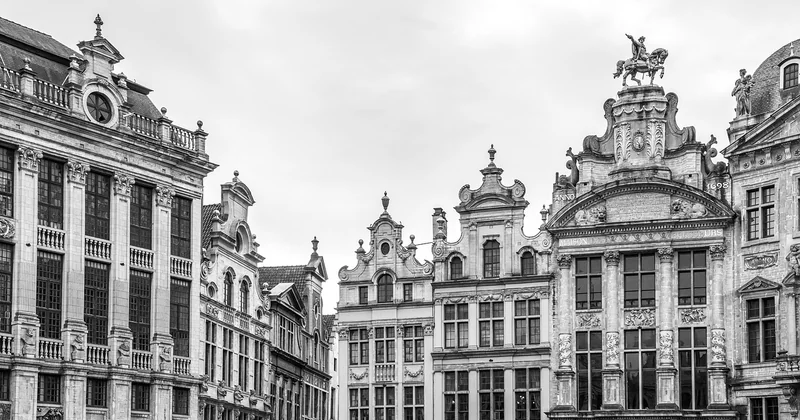
Sofia runs a close second and edges Tirana on food, in my opinion. The Bulgarian capital has a walkable center, a genuine café culture, and a hostel scene that's quietly excellent. There's also something to be said for a city where the metro ticket costs less than a piece of fruit back home.
What "cheapest" actually means in practice
Cheap isn't a single number. It breaks into three levers, and they don't move together:
- Accommodation — the biggest single line item, but also the most variable. A hostel dorm can be €10 in Tirana and €35 in Prague for essentially the same experience.
- Food and drink — this is where the Balkans win outright. A sit-down lunch with wine for two people rarely breaks €20 in Sarajevo.
- Transport — flights, then local transit. The flight is often the largest cost of the whole trip if you're coming from Western Europe.
Most guides obsess over accommodation and ignore the fact that a cheap flight into the wrong airport can wipe out three days of savings. Bucharest's main airport, for instance, is a €10+ taxi ride from the center if you don't take the bus—and that's still cheap, but the principle holds everywhere.
What are the best places to visit in Europe with a low budget?
Beyond the obvious capitals, the real winners are secondary cities. They're cheaper, less crowded, and—this is the part that surprised me—often more enjoyable. A few I'd go back to tomorrow:
Secondary cities that punch above their weight
- Kaunas, Lithuania — Vilnius gets the attention; Kaunas is cheaper, smaller, and has a genuinely lively student scene.
- Brno, Czechia — an hour from Prague by train, roughly 30% cheaper on accommodation, and almost no tourists.
- Košice, Slovakia — the eastern capital nobody visits, with the largest historic center in the country.
- Novi Sad, Serbia — a relaxed riverside city, far calmer and cheaper than Belgrade.
- Plovdiv, Bulgaria — arguably the best-value city break in the EU, full stop.
- Chișinău, Moldova — the wine scene alone justifies it, and you'll be one of very few tourists.
- Berat, Albania — UNESCO-listed, tiny, and priced like it's still 2015.
The trade-off is real: fewer flights, thinner English, less polished infrastructure. But if you can handle a bus that leaves when it's full rather than on schedule, these cities reward you handsomely.
The one rule that saves the most money
Stay and eat one neighborhood outside the historic center. In every single city I've visited in the region, this one decision cut my daily spend by somewhere between 25% and 40%. In Prague, the difference between a restaurant on the Old Town Square and one four tram stops away was, quite literally, triple. Same goulash. Same beer. Different postcode.
What is the most affordable European city?
On a pure ranking, Tirana takes it, with Sofia and Skopje close behind. But "most affordable" is a slightly silly metric on its own, because it assumes you'd enjoy any city equally. You wouldn't.
A better question: which city gives you the best experience per euro spent? On that measure, I'd put Sarajevo at the top. You get Ottoman architecture, Austro-Hungarian boulevards, mountain views, genuinely extraordinary food, and prices that make you check the bill twice. Sofia is more functional but less beautiful. Tirana is cheaper but rougher around the edges.
If you want the honest comparison, here's how a typical day's budget stacks up across four cities, based on what I've actually spent on recent trips:
| City | Hostel bed | Sit-down lunch | Museum entry | Daily total (budget) |
|---|---|---|---|---|
| Tirana | €12 | €6 | €2–4 | €40–50 |
| Sofia | €14 | €7 | €3–5 | €45–55 |
| Sarajevo | €15 | €6 | €2–5 | €45–55 |
| Prague | €28 | €12 | €8–12 | €80–95 |
Those are rough ranges, not gospel, and they swing widely depending on season and how much you drink. But the gap between the Balkan tier and Prague is consistent, and it's roughly double. That's not a rounding error—that's an extra four or five days of travel for the same money.
The currency trap nobody warns you about
Pay in the local currency, always. If a café in Budapest offers to charge your card in euros, decline—unless you enjoy paying a hidden markup on every transaction. This applies across Hungary, Romania, Czechia, Serbia, Albania, and Bosnia. Over a week, that markup can quietly add 3–5% to everything you buy. Not dramatic on a single coffee. Very noticeable on a hotel bill.
Timing, flights, and the practical stuff
Go in late April or early October. Accommodation drops noticeably compared to July and August, the weather is still pleasant, and you avoid the coach-tour crowds that turn Prague's Charles Bridge into a slow-moving queue by mid-morning. The savings aren't just financial—the whole experience is calmer.
The flight reality check
Budget carriers fly to secondary airports across the region, and those airports are often far from where you actually want to be. Some are two hours away by bus. Always check the airport-to-center transfer before booking, because a €19 flight plus a €25 transfer isn't a €19 flight.
Trains within the region are cheap and scenic but slow. Buses are usually faster and cheaper on the same routes. In the Balkans, buses are the default, and they're reliable enough if you don't expect Swiss punctuality.
Is it safe to travel cheaply in Eastern Europe?
Yes, broadly. Petty theft exists in tourist areas—the usual rules apply. Health care access is fine in EU countries; in the Balkans it's fine for minor issues but serious problems mean a trip to a bigger city. Travel insurance is cheap and worth it.
Do I need cash, or is card accepted?
Cards are widely accepted in cities, less so in small towns and markets. Carry a small amount of local currency for buses, street food, and rural areas. ATMs are everywhere but check the fee before withdrawing.
The trip that pays for itself
Here's the thing about cheap city breaks in this part of Europe: the savings don't stay saved. They convert into more days, more cities, more of the trip you actually wanted. That €400 you'd spend on a long weekend in Paris becomes ten days spread across Sarajevo, Mostar, and the Dalmatian coast if you route it carefully.
Not everyone wants that trade. Some people want the postcard, and that's fine. But if you're willing to take a bus that leaves when it's full, eat where nobody speaks English, and stay one neighborhood past the pretty part of town—this region will give you more per euro than anywhere else in Europe. The only question left is which city you book first.