Coffee culture around the world explained: it was never really about the drink
Walk into a café in Naples at 7am and you'll see something that looks, to an outsider, almost rude. A man orders a single espresso, drinks it standing up in about forty seconds, argues briefly about football, pays, and leaves. No laptop. No oat milk. No ceremony. Twenty metres down the street, in Addis Ababa, the same act takes three hours, involves incense, a roasting pan, and the neighbours. Same plant. Same brown liquid. Two entirely different meanings.
That gap is the whole story. Coffee culture around the world explained properly isn't a list of drinks — it's a study of what different societies decided a cup of coffee is for. I've been writing about food and drink for years and I still get this wrong occasionally, assuming that everyone treats a café the way my city does. They don't. Not even close.
Key Takeaways
- Coffee culture is defined by the social function of the cup, not by the quality of the beans.
- Ethiopia is the origin point — and its three-round ceremony (abol, tona, baraka) is the oldest structured ritual still practised.
- The "15-15-15 rule" is a tasting framework, not a brewing recipe, and it's frequently misquoted.
- Europe's coffee houses were once so politically dangerous that authorities tried to ban them.
- There is no single "best" coffee culture. There are at least four incompatible definitions of good.
What actually defines a coffee culture
Coffee drinking is universal. Coffee culture is not.
The distinction matters because most articles on this subject confuse the two. They count espresso machines per capita and call it culture. But the interesting variable is time. How long is a cup supposed to last? In Italy, roughly 90 seconds. In a Gulf majlis, an hour minimum, and refusing a refill is a small social statement. In Scandinavia, the fika break is not really about the coffee at all — it's a protected pause that workplaces schedule around, and the drink is almost incidental.
Three axes that separate one culture from another
After enough travel and far too many disappointing café visits, I've found that most traditions sort along three lines:
- Duration — is the cup a transaction or an appointment?
- Setting — standing at a bar, sitting in a salon, or squatting by a jebena pot at home?
- Who you drink it with. Alone, with strangers, or strictly with family.
Get those three right and you can predict, with reasonable accuracy, how a country behaves in a café. Get them wrong and you'll spend a week in Vienna wondering why nobody will bring you a paper cup to take away.
The takeaway: stop asking what people drink. Start asking how long they're allowed to sit.
What country has the best coffee culture in the world?
The honest answer is that the question is malformed — but you deserve a real answer anyway, so here's mine.
If "best" means the most refined, consistent, technically accomplished daily espresso, Italy wins and it isn't close. A barista in a provincial Italian town who has never heard of a single-origin micro-lot will still pull a better shot than most specialty cafés in cities that consider themselves coffee capitals. Consistency at scale is a genuine cultural achievement, and Italy built it decades before anyone else.
If "best" means depth of ritual and historical continuity, Ethiopia takes it. The coffee ceremony there isn't a performance for visitors; it's a household obligation. Green beans are roasted in front of you, ground by hand, brewed in a clay jebena, and served in three successive rounds. The first, abol, is the most important. The second, tona, is where conversation loosens. The third, baraka — "blessing" — is the one you should not leave before, because skipping it reads as a quiet insult.
And if "best" means the culture most open to outsiders, Australia and New Zealand deserve a mention that they rarely get in these rankings. The flat white is theirs, the third-wave café format was largely shaped there, and the standard of a random suburban café is higher than the standard of a random café in most of Europe.
So what do I actually tell people?
I tell them to pick based on what they want from a cup. Italy if you want excellence without ceremony. Ethiopia if you want meaning. Australia if you want a good coffee and a conversation. Anyone claiming there's one objective ranking is selling something.
What is the 15-15-15 coffee rule?
The commonly cited version of the 15-15-15 rule goes like this: use a 15-gram dose of ground coffee, brew it for 15 seconds of contact time, and serve it within 15 minutes of brewing.
I want to be candid about this one, because I've watched it get mangled badly. That formulation appears mostly in barista-training material and café-operations advice, and it is not a universal law of coffee. Fifteen seconds is far too short for most extraction methods — a standard espresso shot runs somewhere in the 25–30 second range, and filter methods take minutes, not seconds. As a strict brewing recipe, taken literally, it produces weak, under-extracted coffee.
Where the rule has real value is in the third number. The fifteen-minute window is a genuine service standard, and it's the one I'd defend hardest. Coffee held on a hotplate or in a thermos past that point oxidises, and the difference is detectable to almost anyone, not just trained palates.
A more sensible reading
Treat 15-15-15 as a mnemonic for portion discipline, prompt service, and freshness. Treat it as a recipe and you'll be disappointed. I've tested this on myself with a kitchen scale and a timer, and the short-contact version was genuinely unpleasant — sour, thin, forgettable. The freshness window, on the other hand, holds up every time.
Why was coffee called Satan's drink?
Because it made people talk to each other in public, and that frightened the people in charge.
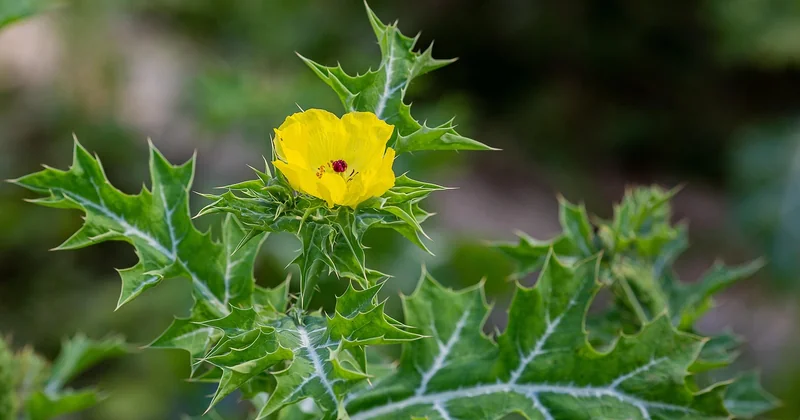
The label is most associated with seventeenth-century Europe, and with the Ottoman Empire before it, where coffee houses became places where ordinary men could gather, exchange news, and criticise authority without a nobleman supervising the conversation. In several European cities, coffee was condemned from pulpits as a heathen import — a Muslim drink, a stimulant, and a gathering point, all at once. The nickname stuck because it captured something real: this was a beverage that produced assembly.
Several attempts were made to suppress coffee houses outright. They generally failed. The commercial argument won — coffee houses generated tax revenue and drew merchants — and once the state realised it could tax the gatherings rather than ban them, the moral panic faded.
The modern echo
You can still see the same reflex today, in a milder form. Every time a new café culture gets criticised for being "just an excuse to socialise" or "overpriced hanging around," it's the same instinct: a public space where people linger unsupervised makes some people uneasy. The drink was never the problem.
What are the twelve types of coffee in the world?
There's no official register, and any list you find will be somewhat arbitrary. But there's a widely used working set, split between espresso-based drinks and brewed or regional ones. Here's the version I find most useful, because it groups by method rather than pretending the categories are equal.
| Drink | Base | What defines it |
|---|---|---|
| Espresso | Espresso | ~30ml, high pressure, drunk fast |
| Ristretto | Espresso | Shorter, more concentrated, less bitter |
| Lungo | Espresso | Longer pull, more caffeine, thinner body |
| Macchiato | Espresso | A stain of milk foam, nothing more |
| Cappuccino | Espresso + milk | Equal parts, traditionally a morning drink in Italy |
| Flat white | Espresso + milk | Thin microfoam, stronger coffee ratio, Australasian origin |
| Latte | Espresso + milk | Milk-dominant, the volume drink |
| Cortado | Espresso + milk | Cut with a small amount of warm milk, Spanish tradition |
| Americano | Espresso + water | Espresso diluted, mimics filter coffee |
| Cold brew | Brewed | Steeped cold for many hours, low acidity |
| Ca phe sua da | Brewed + condensed milk | Vietnamese, strong robusta, served over ice |
| Kopi tubruk | Brewed | Indonesian, grounds and hot water in the cup, unfiltered |
Two things jump out from that table. First, more than half the "types" are the same shot with different amounts of milk or water — the naming is marketing as much as gastronomy. Second, the genuinely distinct traditions, like ca phe sua da or kopi tubruk, tend to come from outside the espresso belt entirely. That's not a coincidence. Cultures that developed their own method didn't need to borrow an Italian vocabulary.
Coffee rituals around the world, and what they mean
The word "ritual" gets thrown around loosely, so let's be precise. A ritual has a fixed order, a social obligation, and a consequence for skipping it. By that standard, most café habits aren't rituals at all.
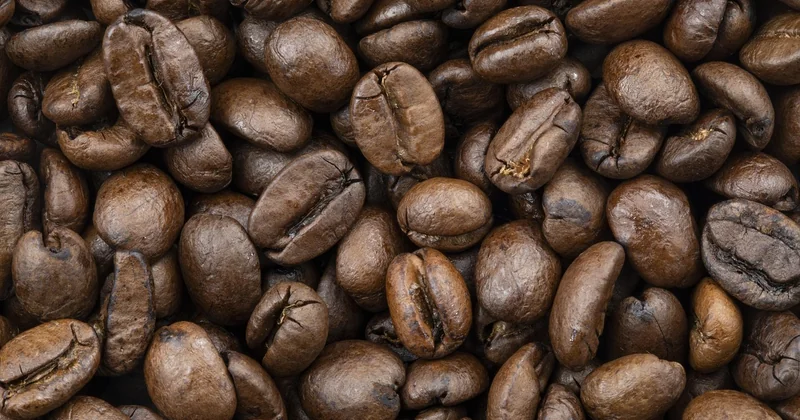
- Ethiopia — three rounds, incense, roasting in the room. Skipping the third is a snub.
- Turkey — cezve brewing on the stove, grounds left to settle, sweetness declared in advance. The grounds are also read afterwards.
- The Gulf — qahwa served in small handleless cups, often with dates, poured with the left hand from a tall pot. Refilling is expected.
- Sweden — fika: a scheduled break, usually with something baked, observed even at work.
- Naples — the caffè sospeso, a cup paid for in advance and left for a stranger who can't afford one.
- Japan — the kissaten, a quiet, often retro café built for solitary concentration rather than conversation.
Notice how few of these involve quality in the specialty sense. The caffè sospeso says nothing about extraction. The kissaten's whole point is silence. What these rituals encode is obligation — who owes what to whom, and what happens if you don't pay.
Why this matters more than beans
If you're trying to understand coffee culture around the world, reading about roast profiles will only get you so far. The variables that actually explain behaviour are social: how long you're allowed to stay, who serves whom, and whether refusing a cup is an option. Beans travel easily. Obligations don't.
The case against all of this
I should acknowledge the pushback, because I get it regularly — and some of it is fair.
There is a real argument that "coffee culture" as a phrase has become a marketing category, and that a lot of what gets celebrated as tradition is either invented or actively monetised. The flat white's global conquest was, in part, a branding exercise. Fika is now sold as a lifestyle concept in cities that have no fika tradition at all. And the specialty café format — bare wood, single-origin cards, an eleven-dollar pour-over — has flattened a lot of genuinely distinct local habits into one exportable template.
A reader once told me they hated coffee culture, full stop, because every café in their city had become the same café. They weren't wrong. The international template is real, and it does erase things.
But that's an argument about the industry, not the culture. The household ceremony in Addis Ababa hasn't been templated. The caffè sospeso hasn't been franchised. The cezve is still on the stove in Turkish kitchens. What's being homogenised is the commercial layer on top — and the commercial layer has always been the least interesting part.
Where this leaves you
Here's the thing I keep coming back to. Every time I try to write a clean roundup of coffee cultures, I end up with a list of social contracts instead.
Ethiopia says: you owe your neighbours three rounds and an hour of your time. Naples says: you owe the stranger who comes after you a cup. Sweden says: you owe your colleagues a pause. The kissaten says, quietly, that you owe nobody anything, and that being left alone is a legitimate thing to want from a café.
Four answers to the same question, all defensible, none compatible. That's not a gap in the research. That's the finding.
So before you book anything, or buy anyone a "coffee around the world" gift set, or try to settle an argument about which country does it best, ask what you actually want the cup to do. Fast, social, ceremonial, or solitary. The coffee will taste fine either way. Whether you've understood the place depends on which one you picked, and whether you noticed you were choosing.