How to experience local culture as a tourist (without turning a neighbourhood into your personal museum)
A friend of mine came back from two weeks in Japan and admitted, somewhat embarrassed, that the highlight of her trip was a 7-Eleven. Not the temples. Not the bamboo grove. A convenience store at 11pm where the cashier patiently taught her three words of Kansai dialect while she bought an egg sandwich. She'd spent four days chasing the postcard version of Kyoto and felt nothing. Then she got lost, got hungry, and accidentally stumbled into something real. Which is, more or less, how it always works.
If you're here, you already suspect that the itinerary on your phone — the one with the 12 must-see pins — is going to leave you with a camera roll full of proof and almost nothing that actually stayed with you. The good news is that experiencing local culture as a tourist isn't a secret ritual reserved for people with unlimited time. It's a set of small, deliberate choices. Most of them cost nothing.
Key Takeaways
- Local culture lives in ordinary routines — markets, buses, kitchens, festivals — not in the monuments built for visitors.
- Learn five phrases in the local language. Five is enough to change how people treat you.
- Stay in residential neighbourhoods, not tourist districts, and use the same transport locals use.
- Eat where there's no menu in your language, and eat the regional dish, not the international version.
- Watch, don't perform. The fastest way to ruin an experience is to treat someone's daily life as content.
- Cultural tourism and local immersion are different things. You can do both, but know which one you're doing.
What "local culture" actually means when you strip the marketing away
Travel brochures love the word culture. What they usually mean is heritage. Castles. Cathedrals. A museum with a coat check. That's fine, but it's a curated version of history, arranged so a busload of people can absorb it in ninety minutes.
Lived culture is messier. It's how people queue. What time dinner starts. Which stalls at the market sell out by 9am and why. Whether you take your shoes off, and where. The unwritten rules are the substance; the buildings are just the backdrop.
Can you give me an example of local culture?
Take something as ordinary as breakfast. In a small town in southern Italy, the morning ritual might be a standing espresso at the bar counter, taken in roughly forty seconds, followed by a quick exchange about the weather or the local football result. Nobody sits. Nobody orders a pastry to go with a long chat. The whole thing is over before a tourist has finished reading the menu.
That little scene contains everything: what people eat, where they eat it, how long it takes, and what conversation is expected. It costs about a euro. And it's far more representative of the place than any monument you'll pay fifteen euros to walk around.
Other everyday examples you can look for on your next trip:
- Regional dishes that don't travel — the ones locals are mildly protective of.
- Handicrafts made in the area rather than imported and rebranded for visitors.
- Music, from street busking to family celebration songs.
- Weekly rhythms: the market day, the day everything closes, the evening stroll.
- How strangers greet each other, and how much physical distance is normal.
The mindset shift that changes everything
You are not the audience here. That's the whole thing.
I made this mistake for years without noticing. I'd arrive somewhere with a mental checklist, and every interaction became a small transaction in service of my list. Ask for directions, get directions, move on. Efficient, empty.
The shift is subtle but it's the difference between a good trip and a memorable one. Instead of asking what this place can give me, ask what's happening here today and whether I can take part without getting in the way. That reframing turns you from spectator into participant, and participants get invited to things. Spectators get asked to move.
Stop treating locals as tourist infrastructure
Nobody in your destination woke up hoping to help you find a pharmacy. If you approach every stranger as a walking information desk, you'll get the answers you asked for and nothing else. Approach the same person with genuine curiosity — about their city, their work, their football team's terrible season — and you might get a recommendation no guidebook has.
That sounds obvious written down. In practice, it's hard. You're tired, you're lost, your phone battery is at 4%. The transaction is easier. Just know that the transaction has a ceiling.
Practical steps before you leave
Most cultural immersion is decided in the planning, not in the moment. Here's what I now do before every trip, after learning the hard way that good intentions don't survive contact with a tired afternoon.
Learn five phrases, not forty
You don't need to become conversational. You need hello, thank you, please, excuse me, and one phrase that shows you made an effort — something like "I don't speak much [language], sorry." Fluency isn't the goal. Signal is the goal.
I once watched a traveller in a Portuguese market open with a heavily rehearsed greeting. The vendor's entire posture changed. Shoulders relaxed. She switched from the tourist version of herself to the actual one. Five words, one shift.
Book yourself into a real neighbourhood
Hotels clustered around the main square exist because that's where visitors want to be. They also insulate you completely. Staying even fifteen minutes further out changes your morning: you buy bread where people buy bread, not where people buy souvenirs.
Homestays and small guesthouses run by residents go further still, though they're not automatically better — a badly run homestay can be just as isolating as a chain hotel, and considerably less comfortable. Read the reviews for signs of actual interaction, not just cleanliness scores.
| Approach | What it gives you | Main drawback |
|---|---|---|
| Tourist-district hotel | Convenience, English spoken everywhere | You could be in any city on earth |
| Residential guesthouse | Neighbourhood rhythm, local tips | Fewer amenities, longer walks |
| Homestay | Daily contact, meals, family context | Varies wildly in quality and privacy |
| Volunteering placement | Purpose, sustained relationships | Time commitment, and ethical scrutiny required |
What to do once you're actually there
Arrival is where good intentions go to die. You're jet-lagged, everything is unfamiliar, and the path of least resistance leads straight to the nearest restaurant with pictures on the menu.
Two rules get you past this.
Follow your stomach away from the main square
The restaurant with the laminated menu in six languages is not where the culture is. It's where the volume is. Walk ten minutes in any direction, ideally uphill or into a residential block, and look for a place where the menu is handwritten, single-language, and slightly worn.
If there's a queue of people who clearly live nearby, you've found it. My most memorable meal in a decade of travelling was a plate of something I couldn't identify, in a dining room where nobody spoke a word of English and the owner eventually just sat down at my table and pointed at things. No menu. No bill presented politely on a tray. It cost the equivalent of six euros and I still think about it.
Use public transport, and get lost on purpose
Guided transport is a bubble. A bus is a cross-section. Buy a ticket, sit where people sit, and watch what happens. Same for markets: skip the central one designed for visitors if there's a district market on the edge of town, because that's where prices, produce, and gossip are all real.
Getting lost is underrated as a method. Aim for a district with no attractions, no reviews, no pin on the map. You'll probably find nothing. Occasionally you'll find a festival, a football match, or a bakery that changes your afternoon.
Say yes to festivals and rituals
Local festivals are the single easiest entry point into a culture, because everyone expects strangers and nobody thinks it's strange that you're there. A saint's day procession, a harvest fair, a neighbourhood street party. You don't need an invitation. You need to show up, stand at the edge, and be respectful about it.
What you must not do is treat it as a photo opportunity. If there's a religious element, follow what everyone else does. Cover what they cover, stay where they stand, keep your phone down during the parts that matter to them.
The limit nobody talks about
Here's the uncomfortable part.
"Authentic local experience" has become a product. Entire neighbourhoods get repackaged as authentic, which is how authenticity dies. The moment a community becomes a destination, rents rise, shops change, and the thing you came to see quietly leaves.
You're part of that process whether you like it or not. The question is how much of a part.
Some honest guardrails:
- Pay people for their time and their work rather than extracting it as a favour.
- Ask before photographing anyone, especially in markets or places of worship. A no is a complete answer.
- Don't wander into residential courtyards because they look charming. People live there.
- Buy from small producers rather than the shop selling imported "local" crafts.
- If you're volunteering, ask hard questions about who benefits. A lot of programmes exist to serve the volunteer's feelings.
Hospitality is not the same as accessibility. A community can be welcoming and still not want a stranger in the middle of a private moment. Reading that distinction correctly is the most valuable travel skill I've picked up, and I'm still not always good at it.
Cultural tourism versus immersion: knowing which one you're doing
These two get blended constantly, and they're not the same trip.
Can you give me an example of cultural tourism?
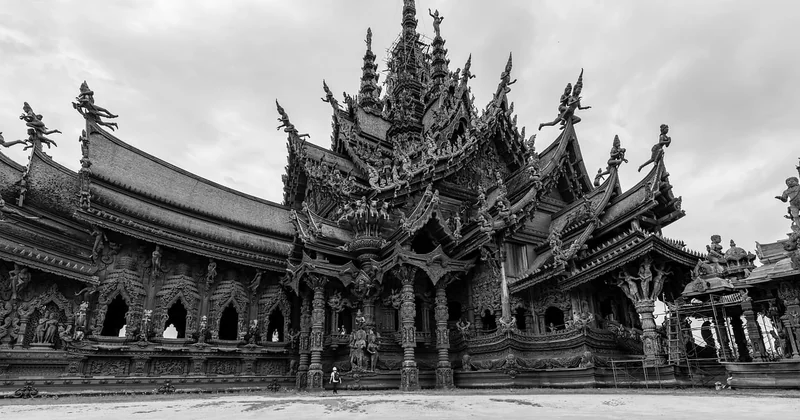
Cultural tourism is visiting a place specifically for its cultural offerings: a museum, a historic quarter, an archaeological site, a traditional performance staged for an audience. The defining feature is that it's organised. There's a ticket, a schedule, and usually an explanation.
Immersion is different. It's participating in culture rather than attending it — cooking with someone's family, working a shift alongside a local team, joining a regular group that isn't performing for anyone. Cultural tourism is more accessible and easier to arrange. Immersion is slower, less comfortable, and much harder to book.
Neither is morally superior. A well-curated heritage visit can teach you more in an afternoon than three weeks of aimless wandering. But if you're hoping for the second while only signing up for the first, you'll come home vaguely disappointed and not know why.
Coming home with something real
The trips I remember aren't the ones with the best itineraries. They're the ones where something unplanned happened: the wrong bus, the closed attraction that pushed me into a side street, the shopkeeper who decided I needed to understand something about her town.
None of that was on a list. All of it was available, on every trip, including the ones where I came home with nothing but photographs.
So here's the thing worth sitting with. The reason my friend remembers a convenience store and not a temple isn't that convenience stores are more interesting than temples. It's that in one of them she was a person, and in the other she was a visitor. You can choose which one you'll be tomorrow, in whichever city you wake up in. It requires no bookings, no guides, and no budget. It just requires you to put the checklist down for an afternoon and see what's actually happening around you.
That's the whole method. Everything else is logistics.