Last March I paid $412 for a round trip from Lisbon to Bangkok. The guy in the seat next to me, same row, same cabin, same seat pitch that makes you question your life choices, paid $1,180. We compared notes somewhere over the Bay of Bengal. The difference wasn't luck and it wasn't a secret airline employee discount. It came down to four decisions he made wrong and I made right.
That gap — roughly three times the price for an identical seat — is the whole game. Finding the cheapest ways to book flights and save money isn't about one magic website. It's about knowing which levers actually move the price, and ignoring the ones that only move your anxiety.
I've booked somewhere north of 200 flights in the past decade, including a run of years where I was chasing error fares across three continents. I've also wasted money. A lot of it. Here's what survived the trial and error.
Key Takeaways
- Error fares and mistake fares are the single biggest lever — I've booked long-haul business class for under $600 this way.
- Search one-way segments separately: it beats the round-trip price on most long-haul routes, even after you add a checked bag.
- Split ticketing (two separate bookings) undercuts through-fares by 20–40% on connecting itineraries — but you carry the risk if the first leg is late.
- Hidden-city ticketing works and is legal, but you must never check a bag and never book a return as the hidden leg.
- Booking early isn't always cheaper. For domestic and intra-European flights, the sweet spot sits much closer to departure than you'd guess.
- Stop trusting "the cheapest day to fly." Trust your flexibility and price alerts instead.
The cheapest ways to book flights start with one radical move: stop searching for the flight you want
Here's the thing nobody tells you. The moment you type a specific destination and date into a search box, you've already capped how much you can save. You're negotiating with the airline on their turf, at their price, for a product they know you need.
The people paying $300 instead of $900 aren't better negotiators. They're buying a different flight than the one you searched for. That's the entire trick.
Search by price, not by destination
Google Flights lets you leave the destination field empty. You set a budget, a month, and a departure airport, then it shows you everywhere you can go for that money. I did this in January 2026 with a $250 ceiling and a two-week window. It surfaced a $188 return to Marrakesh, a $210 return to Athens, and a $240 return to Istanbul. None of those cities were on my radar. Two of them ended up being excellent trips.
The same logic applies within a region. If you want "somewhere warm in February," let the map decide instead of fixating on Cancún and then complaining that Cancún is expensive in February. It is. Everyone wants Cancún in February.
Error fares: the lever that actually changes the math
Airlines publish wrong prices by accident. A missing fuel surcharge, a currency conversion glitch, a fare class loaded at the wrong decimal. These mistakes stay live for anywhere between twenty minutes and a few days, and during that window the price is real and the ticket is bookable.
I've done this five times. The best one: a return from Madrid to Tokyo in premium economy for $540, taxes included, on a route that normally runs closer to $1,400. The ticket held. I flew it. The airline honored the fare because the booking was confirmed and paid.
How do you find them? Not by refreshing Google Flights. You subscribe to newsletters that do nothing but monitor fare classes all day and push a notification the second something breaks. There are a handful of well-known ones — Secret Flying and Jack's Flight Club are the two I've used most, both free tiers. The catch: you need to be able to drop everything and book within hours, and you need flexible dates. If your trip is fixed to a wedding on the 14th, error fares will mostly just taunt you.
One more caveat, and it matters. Book these directly with the airline, never through a third-party consolidator, even if the consolidator shows the same price. When a fare is contested, the airline protects its own bookings first. I learned that the expensive way in 2019 when a $380 São Paulo fare evaporated because the OTA couldn't ticket it fast enough.
One-way tickets and split ticketing: the two mechanics that quietly cut 30% off your fare
For most of aviation history, a round trip cost less than two one-ways. That stopped being true on a lot of long-haul routes years ago. Legacy carriers now price one-ways competitively to compete with low-cost carriers, and mixing airlines across the two directions often beats any single round-trip fare.

Search each direction as a separate one-way. I do this on every long-haul booking now. On a recent Barcelona–Bogotá trip, the round trip on one airline quoted $790. Booking outbound on one carrier and the return on a different one, both one-ways, came to $510. Same route, same dates, three hours of extra clicking.
Split ticketing and its very real risk
Split ticketing means buying two separate tickets that together form one journey, instead of a single through-ticket. Example: instead of a Milan–Bangkok through-fare at $850, you book Milan–Doha on one ticket and Doha–Bangkok on another. I've seen that combination come in 20–40% cheaper than the through-fare, especially on routes where a hub carrier dominates.
But here's the part that gets people in trouble. On a through-ticket, if your first flight is delayed and you miss the connection, the airline rebooks you for free. On two separate tickets, that connection is your problem. Miss it and you buy a new ticket at walk-up prices, which is the most expensive way to buy a flight that exists.
My rule: only split tickets when the layover is at least four hours, and only when the savings clear $150. Below that, you're taking real risk for pocket change.
Hidden-city ticketing, and when it bites back
Sometimes a flight from A to C, connecting through B, costs less than a flight from A to B. You book the longer ticket and simply get off at B. This is called hidden-city ticketing, and it's legal. Airlines hate it, and their contracts of carriage let them punish you for it.
Two hard rules. First, never check a bag — it flies to C without you. Second, never do this on the outbound leg of a round trip. Skip a segment and the airline cancels every remaining segment on that booking. I watched a colleague lose a $900 return from Sydney this way. He saved $60 on the outbound.
Booking timing: what actually works, and what's folklore
"Book 54 days out." "Tuesday at 3pm is cheapest." "Never book on a weekend." You've read all of it. Most of it is noise dressed up as data.
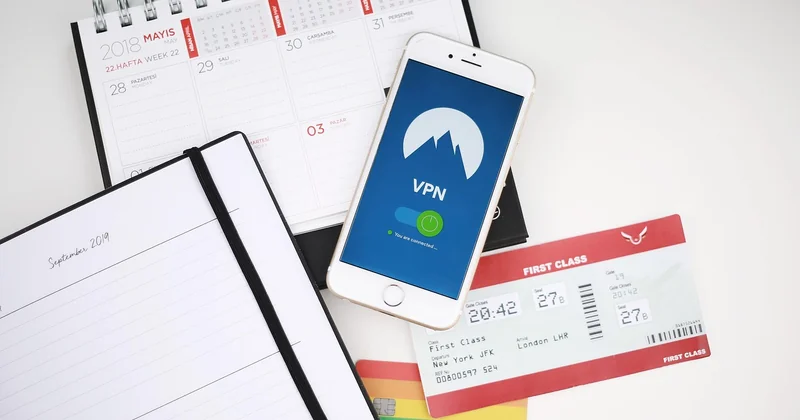
What actually holds: for domestic and short-haul flights, prices tend to be lowest in the window somewhere between three weeks and three months before departure, and they climb steeply in the final two weeks. For long-haul international, the curve is flatter and earlier bookings usually win, mainly because cheap fare classes sell out. Cheap seats run out before cheap days do.
What doesn't hold: any specific day of the week to book. That myth comes from old airline revenue-management schedules that no longer exist. What does hold is flying on the day itself. Tuesdays, Wednesdays, and Saturdays are consistently softer than Fridays and Sundays on most routes. That's demand, not superstition.
The practical move: set a price alert the moment you know roughly when you want to travel, and book when the number drops below what you'd happily pay. Stop trying to hit the exact bottom. You won't, and the two weeks you spend waiting usually cost more than the $30 you might have saved.
Comparing your options: which lever is worth your time
Not every tactic deserves your attention. Here's how I rank them by effort versus realistic savings, based on what I've actually recovered over the years.
| Tactic | Typical savings | Effort | Risk |
|---|---|---|---|
| Error fare newsletters | 50–80% off | Low (subscribe, wait) | Must book fast, dates inflexible |
| Split ticketing | 20–40% | Medium | Missed connection = your cost |
| Separate one-way bookings | 15–35% | Low | None meaningful |
| Hidden-city ticketing | 10–30% | Medium | High if you check bags or fly round trip |
| Flexible dates / midweek flights | 10–25% | Low | None |
| Points and miles sweet spots | Varies wildly | High (learning curve) | Devaluation, availability |
| Incognito mode / clearing cookies | Essentially zero | Low | None — because it does nothing |
Notice what's at the bottom. I tested the incognito trick seriously for about six weeks in 2022, logging prices with and without cleared cookies on the same routes. The difference was within normal daily fluctuation. Airlines price on demand and inventory, not on whether they recognize your browser. Save yourself the ritual.
And notice what's missing entirely: the airport counter. Walking up the day of departure is the most expensive ticket in commercial aviation. I once paid $640 for a one-way that would have cost $90 booked a week earlier. Never again.
Points and miles: worth it, but only if you commit
I'll be honest with you. I resisted points for years because the whole thing felt like a hobby for people who enjoy spreadsheets. Then I did the math on a single redemption and changed my mind.
The trick isn't earning points. It's spending them at the right airline's partner sweet spot, where the same flight costs a fraction of what the operating carrier charges on its own metal. A business-class seat that sells for $4,500 can often be had for the points equivalent of a $700 economy ticket, if you route through the right partner program.
That said — the learning curve is real, award availability is genuinely scarce on popular routes, and programs devalue without warning. Treat it as a long-term project, not a hack. If you fly more than a handful of times a year and can plan months ahead, it pays off. If you book trips two weeks out, mostly it won't.
Should you get a travel card just for this?
Only if you'll actually hit the sign-up bonus without changing your normal spending, and only if you pay the balance in full. Carrying a balance to earn points on flights is the most expensive ticket you'll ever buy. I've watched people chase a $500 flight bonus and pay $700 in interest. That math doesn't work no matter how you run it.
The real reason some people always pay less
Back to that Bangkok flight. My seatmate had done everything the conventional wisdom tells you to do. He picked his destination first, searched round trip, booked through a comparison site three months out, and paid full price for a checked bag at the gate. Every individual step was reasonable. Stacked together, they cost him $768.
The people who consistently pay less aren't luckier. They've made peace with a slightly less convenient version of the trip they imagined. A different destination. A different date. Two tickets instead of one. A four-hour layover in Doha. That willingness to bend is worth more than any tool, any alert, any website.
So here's the question worth sitting with. Next time you need to fly, are you booking the trip you've pictured, or the trip the price is pointing at? The first one always costs more. The second one is often better — which is the part nobody warns you about.