People picture national park camping as a campfire, a ranger hat, and a starry sky. Then they hit the gate on a Saturday in July and find a sign that says all campgrounds full, a ranger telling them fires are banned this week, and 200 cars circling the same loop. I learned this the hard way in my second season of park trips. The fix isn't a better tent. It's knowing how the reservation machine, the land rules, and the food storage laws actually work before you leave the driveway.
Key Takeaways
- Most campsites inside major national parks open for booking months ahead, and you'll want a calendar alarm, not a reminder.
- Camping inside a park usually means paying a nightly fee at a designated campground. Free camping happens mostly outside park boundaries, on national forest and BLM land.
- Food storage rules are non-negotiable. A bear canister or a bear box is required in many parks, and rangers do check.
- No reservation today? There's almost always a fallback: first-come sites, dispersed camping outside the boundary, or a last-minute cancellation.
- Wild camping inside national parks is tightly regulated and often illegal outside designated zones. National forests are far friendlier to it.
How to actually book a national park campsite
The single biggest beginner mistake, in my view, is thinking about gear before thinking about logistics. I watched a friend drop $600 on a tent and an ultralight stove, then discover the campground he wanted had been full since March.
Here's the thing: reservation windows are long. Popular parks open bookings roughly six months out, some on a rolling daily release, and a handful use a lottery for prime spots. Yosemite is the classic example people mention. Miss the window and you're in the cancellation game.
Is there a set reservation window across all parks?
No. Each park runs its own system, and some use different platforms entirely. That inconsistency catches beginners off guard, because you expect one national website and get three.
- Some parks release everything on a single date.
- Others drip sites out daily, so a booked-out month can reopen tomorrow.
- Walk-up, first-come-first-served sites still exist at smaller parks.
Practical move: pick three candidate parks instead of one. I started doing this two years ago and my success rate on getting a spot went from "usually skunked" to something like four out of five trips.
What if the campground is full?
You have real options, and none of them require sleeping in your car illegally in a scenic turnout.
- Check cancellations the morning of arrival. People drop sites constantly.
- Look at first-come campgrounds just outside the park boundary.
- Camp on national forest or BLM land nearby and drive in for day hikes.
- Book a slightly less famous park. The crowds thin fast.
That last one changed my whole approach. I stopped chasing the marquee parks and started aiming at the ones an hour away from them. Same scenery quality, a fraction of the reservation stress.
Can you camp in national parks for free?
Short answer: rarely, and not where you're probably hoping. Frontcountry campgrounds inside parks charge a nightly fee, and it varies wildly. I've paid as little as $12 and as much as $35 for a basic tent site in the same category of park.
Free camping in the sense beginners mean it, where you pull off a dirt road and pitch a tent, mostly happens outside the park boundary. On national forest and BLM land, that's often legal and costs nothing. Inside a national park, campsites are designated, and sleeping anywhere else is typically prohibited.
Dispersed camping in national parks
This is where a lot of confusion lives online. Dispersed camping is a real thing, but it's a national forest and BLM concept. Most national parks do not allow it at all. A few allow backcountry camping in permitted zones, and those permits are a separate process from the campground reservation.
If someone tells you they "dispersed camped in a national park," they almost certainly camped on forest land adjacent to it. Worth knowing before you set your heart on it.
| Land type | Typical cost | Dispersed camping | Rules you'll feel |
|---|---|---|---|
| National park campground | $10–$35/night | Not allowed | Fees, food storage, fire bans, quiet hours |
| National forest | Often free | Usually allowed | Distance from water and trails, no facilities |
| BLM land | Free | Allowed | No toilets, no water, pack everything out |
The rules beginners skip — they matter most
Fire rules and food storage are where first-timers get tripped up, and it's not a small thing. A bear box isn't a suggestion in parks with active wildlife. Leave food in your tent and you may come back to a shredded tent and a citation.
Can you wild camp in national parks?
Generally no, not in the sense of setting up anywhere you like. Wild camping in national parks is restricted to designated backcountry zones, and those usually require a permit obtained in advance. National forests are the friendlier place for that kind of freedom, and that's where I'd point a beginner who wants the off-grid experience without the paperwork headache.
What about campfires?
They depend entirely on the park and the season, and they change with fire danger. In dry summer stretches, entire parks go fire-free, including charcoal. I once watched a family get a talking-to for a grill they'd assumed was fine. Check the park's current fire status the week you leave, not the week you booked.
RV camping in national parks
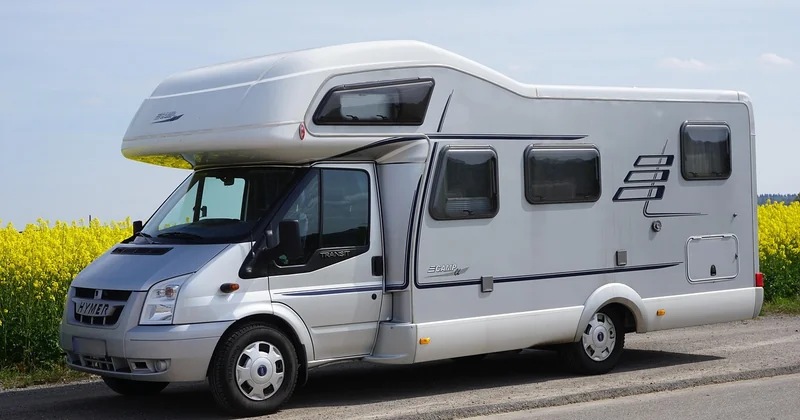
Not every campground fits a rig, and this is a hard wall for beginners. Many park sites cap length at 20 or 25 feet, and some have no hookups at all. If you're renting an RV, confirm the specific loop accepts your size before you commit.
Two things I'd flag from watching friends try it:
- Generator hours are limited, and neighbors notice.
- Dump stations inside parks exist but can be scarce and busy.
Tent camping is simpler for a first trip. Take that as a personal bias if you like. I'll stand by it.
What to pack without overspending
You don't need much, and you can rent the expensive parts. My first setup was borrowed. My second was used gear from a local shop. I only bought new stuff after I knew I actually liked this.
- Shelter: a tent rated for the weather you'll actually get, not the worst case you imagine.
- Sleep system: a pad matters more than the sleeping bag. Cold ground ruins nights.
- Water: a filter or treatment tablets, plus a way to carry several liters.
- Food storage: a bear canister if the park requires one. Rent before you buy.
- Layers, a headlamp, and a first-aid kit you know how to use.
The one item I'd never skimp on is a sleeping pad. I spent a miserable night on a cheap foam pad at a high-elevation site and woke up colder than I've ever been camping. Fixed it the next week.
Leave No Trace isn't a slogan
Toilets and water are the unglamorous reality of park camping. Some campgrounds have flush toilets and potable water. Others have vault toilets and nothing drinkable. Know which one you're booking.
Pack out everything, including the stuff you'd rather not carry. That's the deal that keeps these places open to camping at all.
My honest advice for a first trip: choose a park just outside the famous ones, book the moment the window opens, rent your gear, and treat the rules as the actual skill you're learning. The scenery takes care of itself. The part that decides whether you have a good time is whether you understood the system before you got in the car.